Product Overview
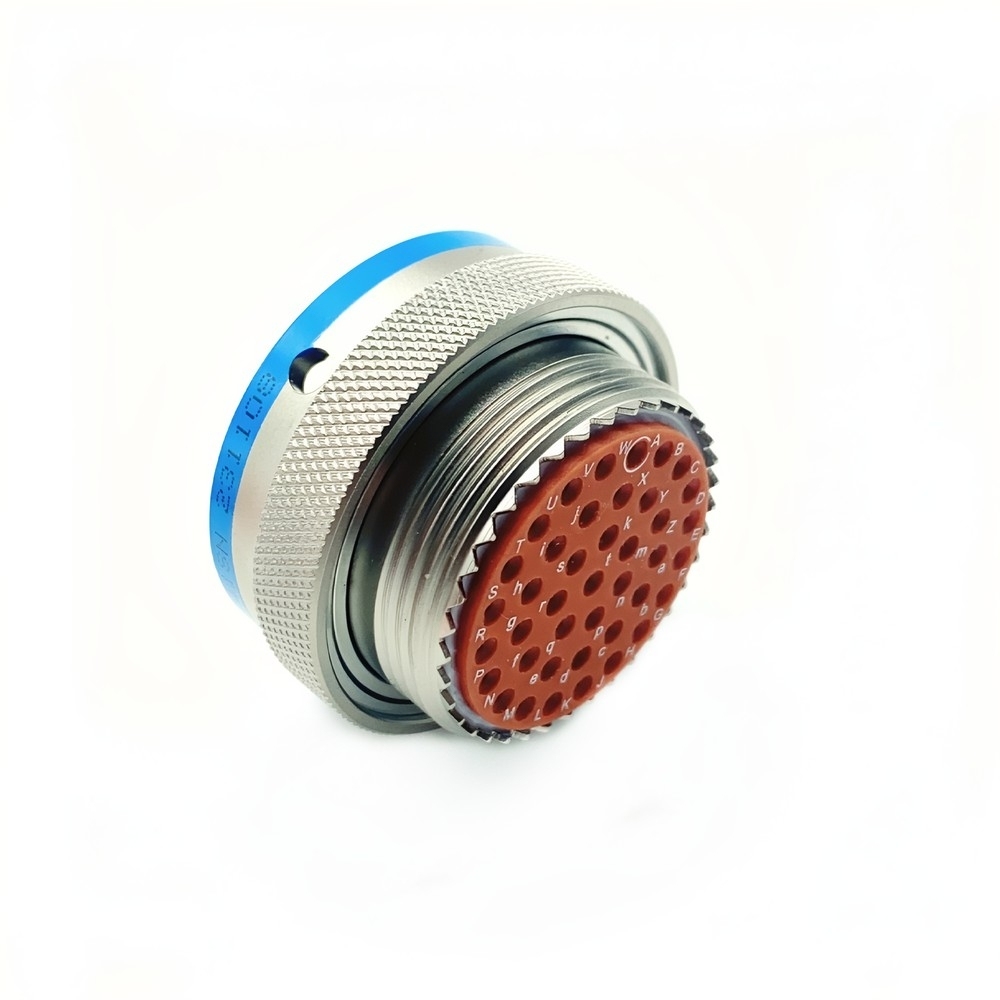
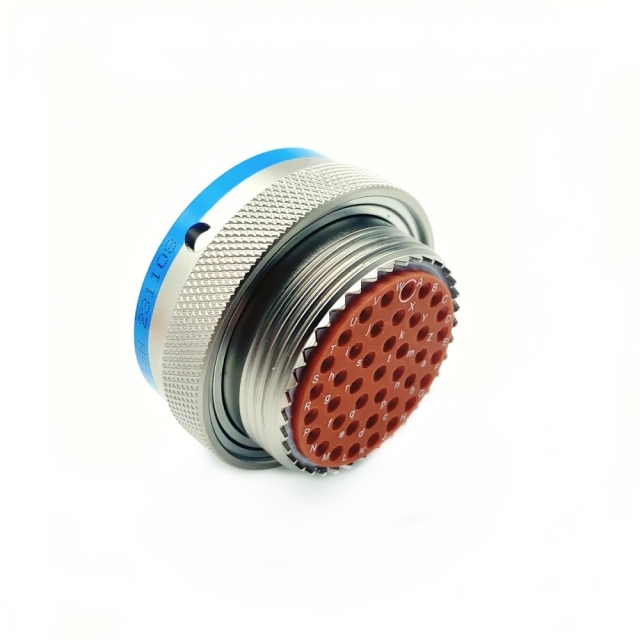
MS27473T20F41SN is a plug in the MIL-DTL-38999 Series II range, built for harnesses that have to stay connected through vibration, salt air and wide temperature swings. The body is a machined metal cylinder with a knurled coupling ring and a red-orange contact insert, so it can be handled in gloves and still be lined up correctly. Every connector in this family shares the same shell-and-insert architecture, which is why a plug bought for one programme can be mated to a receptacle built for another as long as shell size, contact layout and keying agree — and why the same insert is available as a bayonet military circular connector where a quarter-turn suits the rack. For a fleet or a repair depot that means one range of receptacles on the shelf and plugs added as harnesses change.
Part Number & Contact Codes
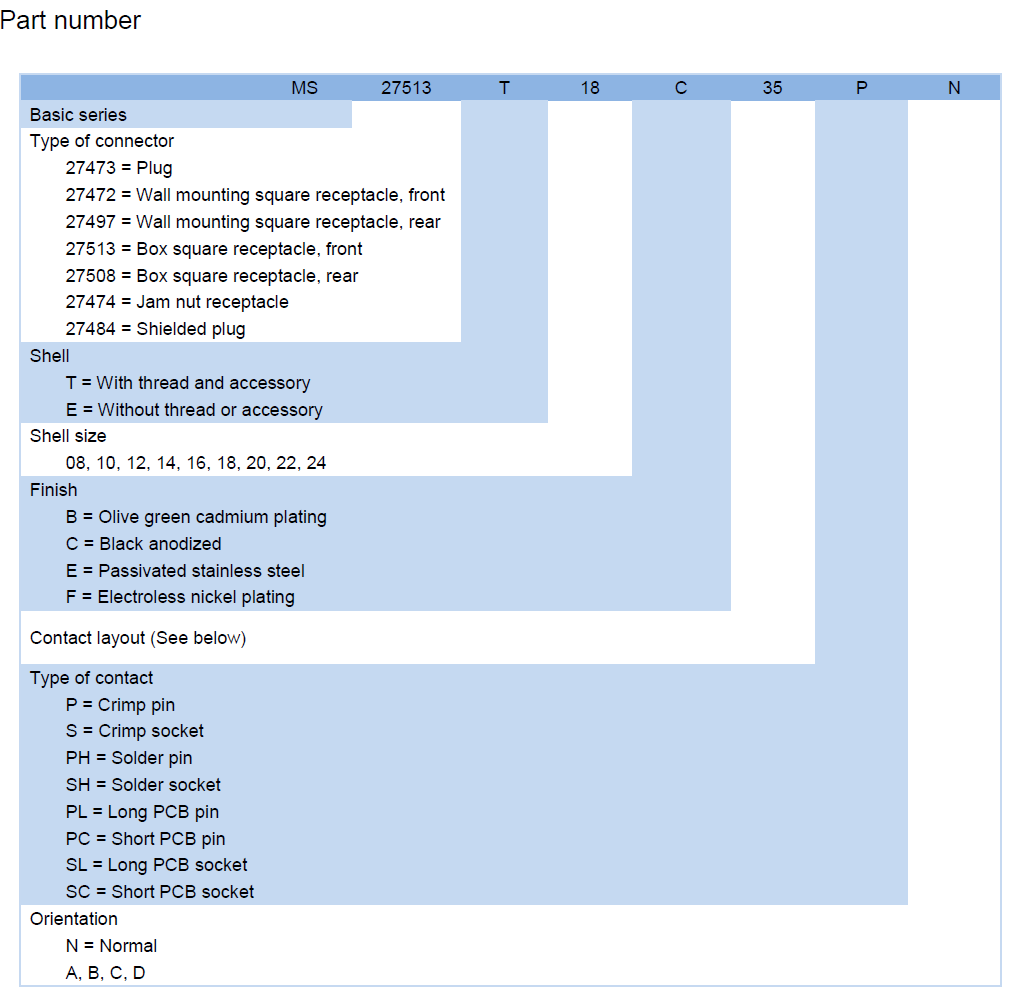
| Code | What it sets |
| MS | Military standard prefix |
| 27473 | Plug |
| 27472 | Wall-mount receptacle, front mounting |
| 27474 | Jam-nut receptacle |
| 27484 | Shielded plug |
| T | Threaded coupling, shell threaded for a rear accessory |
| 20 | Shell size 20 — the family covers sizes 08 to 24 |
| F | Electroless nickel plating |
| B / C / E | Olive drab cadmium / black anodised / passivated stainless steel |
| 41 | Contact layout 41 |
| S | Crimp socket contacts |
| N | Normal keying orientation |
| P / PH / SH | Crimp pin / solder pin / solder socket |
| PL / PC / SL / SC | Long or short PCB pin and PCB socket |
Shell, Coupling & Mounting
- Threaded coupling (T). The plug is drawn onto the receptacle by hand on a knurled ring, which keeps the joint tight under the vibration of a vehicle chassis or an engine bay. In this code the rear of the shell is threaded as well, so a threaded coupling military connector like this one takes a backshell and strain relief directly.
- Bayonet option. Where there is no room to turn a coupling ring, the same insert and contact system is available as a bayonet military circular connector — push and quarter-turn to mate, which is easier one-handed in a crowded avionics rack.
- Mounting styles. The family covers wall-mount square flange receptacles in front and rear fixing versions, box-mount receptacles and jam-nut receptacles. Choosing the right panel mount circular connector usually comes down to whether the flange sits outside or inside the bulkhead and how much thread the panel thickness leaves — the kind of detail a MIL-DTL-38999 connector manufacturer works out from the panel drawing.
- Keying. N is the normal orientation; A, B, C and D alternates let two connectors sit side by side with no chance of a cable assembly being cross-mated.
- Identification. A blue band on the shell and lettered positions on the insert make it obvious at a glance which MIL-DTL-38999 Series II connector and which circuit you are working on, during assembly or during fault-finding.
Contact System & Signal Integrity
The contacts are gold plated, which holds contact resistance low over repeated mating and keeps corrosion at the interface to a minimum. Polarised keying works alongside them: the plug can only go on one way, so a forced mate cannot push a contact sideways or bend a pin. Contact style is written into the code. Where a build needs a contact style or finish that is not a stock line, it is produced to the drawing as custom circular connector oem work, with the code on the drawing acting as the specification. Electrically, the insert is laid out for stable impedance and low insertion loss across the mated pair. That is what lets the same shell carry signal and power runs in one cable assembly without the two interfering.
Sealing & Environmental Protection
- Three seals, not one. An interface seal closes the mated joint, a rear wire seal grips each wire as it leaves its contact, and a body seal closes the shell itself. Water has to get past all three before it reaches a contact, which is the sealing standard a MIL-DTL-38999 connector manufacturer works to.
- The interface seal depends on the coupling. The face seal compresses as the ring is turned home, so a threaded coupling military connector that is only part-turned is not sealed, however tight it feels.
- Rear wire seals are where assembly shows. A seal pushed over nicked insulation will weep in service, so check the wire before the contact goes into the insert.
- Flame-retardant materials. The insert and seals use materials rated for flame retardancy to MIL-STD-810, which matters where a cable bundle runs near heat sources or through an occupied compartment.
- Temperature cycling. The seal stack is designed to keep working from the cold of high altitude to the heat beside an engine, right across the range specified for a MIL-DTL-38999 Series II connector.
- Where it counts. Three seals, each with its own job, are what make this part dependable as a ruggedized military electrical connector in wet, salty or washdown service.
Installation & Field Service
- Inspect the insert and the interface seal before the cable assembly is dressed into the equipment — a nicked seal or a bent contact is the usual cause of a leak found months later.
- Crimp the socket contacts for the wire gauge on the drawing, then push each contact into the insert until it seats. A contact that goes in with resistance is in the wrong cavity.
- Fit the rear accessory and wire seals after the contacts are in place, so the strain relief lands on the shell and not on the crimp joint.
- Align the keyway and the lettered positions, then turn the coupling ring by hand until it stops.
- Check engagement by trying to pull the plug straight back and by rocking the coupling: a correctly seated plug on this ruggedized military electrical connector has no rock and no gap at the interface.
- For maintenance, the plug uncouples and re-mates without disturbing the terminated cable assembly, which is the point of the quick-disconnect coupling on this family. A damaged plug is swapped, not re-wired.
- On custom circular connector oem builds where the mating half is fixed to a bulkhead, the panel mount circular connector goes in first and the cable assembly is dressed afterwards, so the cable never carries the weight of the plug while you work.
Application Scenarios
Aerospace. Avionics bays, flight control runs and engine monitoring harnesses all ask the same thing of a connector: a sealed, keyed joint that will not work loose. Military. Radar cabinets, tactical vehicles and communications equipment put the plug through shock, dust and constant movement. The threaded ring is the reason this shell is chosen on vehicle-mounted harnesses: nothing springs open when the platform hits a rut. Salt air attacks the finish and condensation attacks the seal, so the plated shell and the sealed interface matter more here than in any other installation. Industrial. Harsh-environment control cabinets, outdoor instrumentation and skid-mounted equipment use the same family where a commercial circular connector would be the weak point in the enclosure.
Specification Highlights
The connector features a triple-seal design with environmental seals, rear wire seals, and connector body seals.
| Property | Value |
|---|
| Sealing | IP67-rated |
| Operating temperature | -65 °C to +200 °C |
| Vibration | 10–2000 Hz |
| Shock | 100 G |
| Salt fog | Corrosion resistance to Series II requirements |
| EMI | Shielded across the mated shell joint |
| Mating | Series II plug to Series II receptacle with matching shell and layout |
| Contact identification | Lettered positions on the insert |
Product Advantages
- Certified reliability. Built to MIL-DTL-38999 Series II, the specification that sets the mechanical, electrical and environmental tests for this class of connector, so the part is judged against a published standard rather than a catalogue claim.
- Reduced downtime. A joint that stays sealed and stays mated removes the most common cause of repeat maintenance on a cable assembly — the connector that worked loose or let moisture in.
- Future-proof design. The Series II interface is backward compatible with legacy Series II infrastructure, so existing receptacles, tooling and drawings stay in use when a cable assembly is refreshed.
- Supply chain assurance. Traceable manufacturing with full documentation support: certificate of conformity and test reports travel with the order, which is the first thing a quality auditor asks to see.
Ordering & Delivery
- Send the part number and the quantity you need, and flag any change to finish, keying or contact style at that point so the quotation matches the variant you actually want.
- Quotations are issued against Flexible MOQs, so a prototype build and a production release can be priced separately.
- If the mating half is a panel mount circular connector, order plug and receptacle together so shell size and keying are checked once instead of twice.
- Payment terms, incoterms and packing method are agreed on the quotation — tell us before the order is released if the shipment needs a specific packing arrangement.
- Stable global delivery keeps scheduled call-offs on track; give us the required date and we will confirm it against production.
- Ask your sales contact about sample availability and the lead time for the exact variant, since both are confirmed per order.
- As a military circular connector supplier we ship from our own plant, so the part number you receive is the one that was built on our line.
Technical Support & Model Matching
Selecting the right connector is rarely a one-line decision. Send us your drawing, part number or a sample, and our engineering team will confirm the matching shell size, contact arrangement, coupling and mounting style, cross-reference discontinued or alternate part numbers, and advise on sealing and flange options for your environment. We also help troubleshoot fit, mating and signal problems, and give installation and commissioning guidance so your line stays up. As a direct manufacturer, our answers come from the people who build the parts — from first enquiry through after-sales support.
FAQ
Which contacts do I need on the mating half?
This plug carries crimp socket contacts, so the receptacle it mates with needs pins in the matching layout. Shell size, contact arrangement and keying have to line up on all three before the pair will mate — shell 20, layout 41 and normal keying here. Every mil-dtl-38999 series ii connector in the family follows the same pin-and-socket logic, so an existing receptacle can be checked against those three items in a minute.
Is this plug threaded or bayonet coupled?
Threaded. The T in the code means the coupling ring is threaded and the rear of the shell is threaded for a backshell or strain relief. A bayonet military circular connector version of the same insert is available where a quarter-turn is easier to reach. As a military circular connector supplier we can quote either from the same drawing.
Can the finish, keying or contact style be changed?
All three are letters in the code. The finish letter sets the plating, the keying letter sets the orientation, and the contact letter sets crimp, solder or PCB termination. Where those choices have to be locked to an existing drawing, the build is handled as custom circular connector oem work against that drawing.
How does the coupling cope with vibration?
The threaded ring draws the plug onto the receptacle face and holds it there, with no spring latch to work loose, and the keyed shell takes the strain off the contacts. That is why a threaded coupling military connector is the usual choice on vehicle, engine and generator-mounted harnesses.
How is the connector protected in salt fog or washdown?
The interface seal closes the joint, the rear wire seals close the cable entry and the plated shell takes the salt. Sealing only holds with the coupling fully engaged, and the face seal should be inspected each time the plug is re-mated — a nicked seal is the usual reason a sealed connector starts to leak. Any ruggedized military electrical connector depends on that inspection routine as much as on its materials.