Product Overview
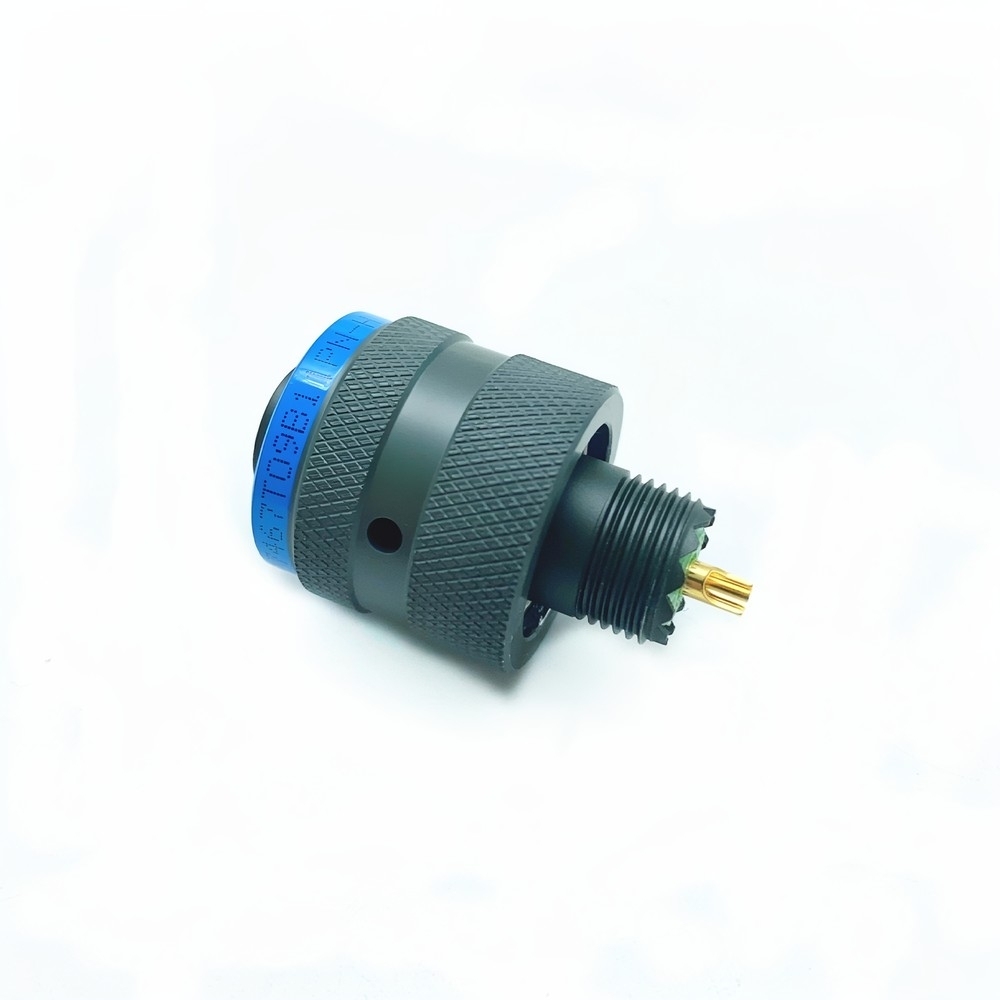
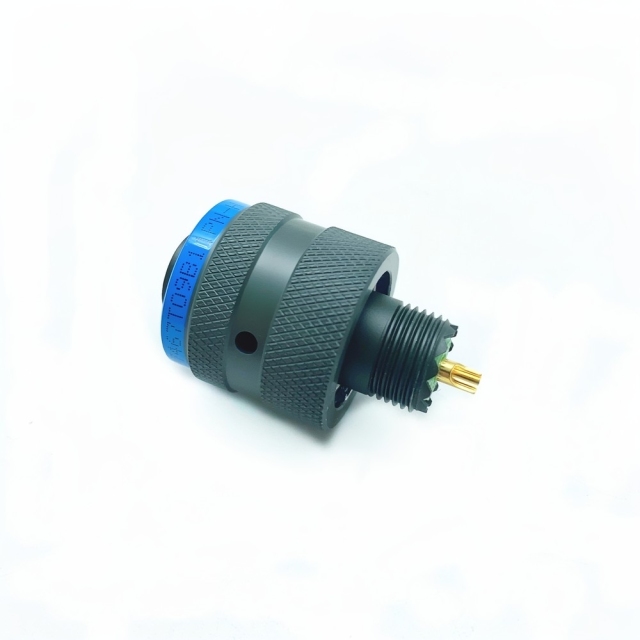
The MS27467T11B01PN connector is the cable-end half of a MIL-DTL-38999 Series I connection: a shell 11 straight plug with a coupling ring, a sealed interface and crimp pin contacts in the 01 layout, keyed in the normal position. It terminates a cable assembly and locks onto a receptacle fixed to a panel, bulkhead or equipment housing, so it is ordered as one half of a matched pair rather than as a stand-alone part.
Shell 11 sits near the small end of the series — the sizes run from 09 to 25 — and that is the whole point of this variant. Where a bay, a junction box or a gimbal leaves very little room for connectors, a compact shell with a dense 01 contact layout keeps the cable assembly from growing extra breakouts. Short cable runs, tight panel spacing and weight-sensitive assemblies are where it earns its place.
We build and ship this plug as a military circular connector supplier, which means the configuration on your drawing is the configuration that arrives: same shell, same layout, same keying, same crimp pin contacts. Nothing is substituted to fill an order, so an existing cable-assembly drawing does not have to be re-qualified around a different part.
Day to day the plug sits at the end of a cable. It is mated once during build or at a maintenance point and stays coupled for the life of the installation; when a box is pulled for service or a cable assembly is replaced, this is the part that comes apart and goes back together. That is why the coupling action and the sealing interfaces get more attention here than any single electrical figure.
Most buyers are avionics and defense cable-assembly builders, repair and overhaul teams replacing a damaged cable end, and industrial equipment makers who need a sealed circular interface on a moving platform. They arrive with a number already written on a drawing, and the job of a custom 38999 connector factory is to match it exactly.
Mil-Spec Compliance
- The mating envelope — Series I fixes the plug-to-receptacle geometry, so a compliant plug mates with a compliant receptacle of the same shell size, layout and keying, whoever built either half.
- Contact position and retention — the insert holds every contact at a defined depth, so pin and socket engage by the same amount in every build rather than by whatever the assembler felt was seated.
- Mechanical strength — the shell wall, the coupling and the accessory interface at the rear are all covered, which is why a backshell fits without adapters or packing.
- Electrical integrity — contact resistance and insulation behaviour are specified as limits an assembly must meet, not as typical values on a marketing sheet.
- Environmental behaviour — the sealing that makes it a waterproof mil-dtl-38999 connector is tested to defined methods alongside temperature, vibration and salt spray, instead of being described in general terms.
- What we check before packing — as a mil-dtl-38999 connector manufacturer we verify shell machining and plating, insert bonding, contact retention, keying position and the sealing interfaces on our own line.
- Documentation — if your receiving inspection needs paperwork to accompany a delivery, tell us what the programme asks for, and as a military circular connector supplier we will go through what can be supplied.
- Corrosive atmospheres are resisted through hermetic sealing and corrosion-resistant materials such as aluminum alloy and stainless steel, protecting against salt spray, fuels, and chemicals.
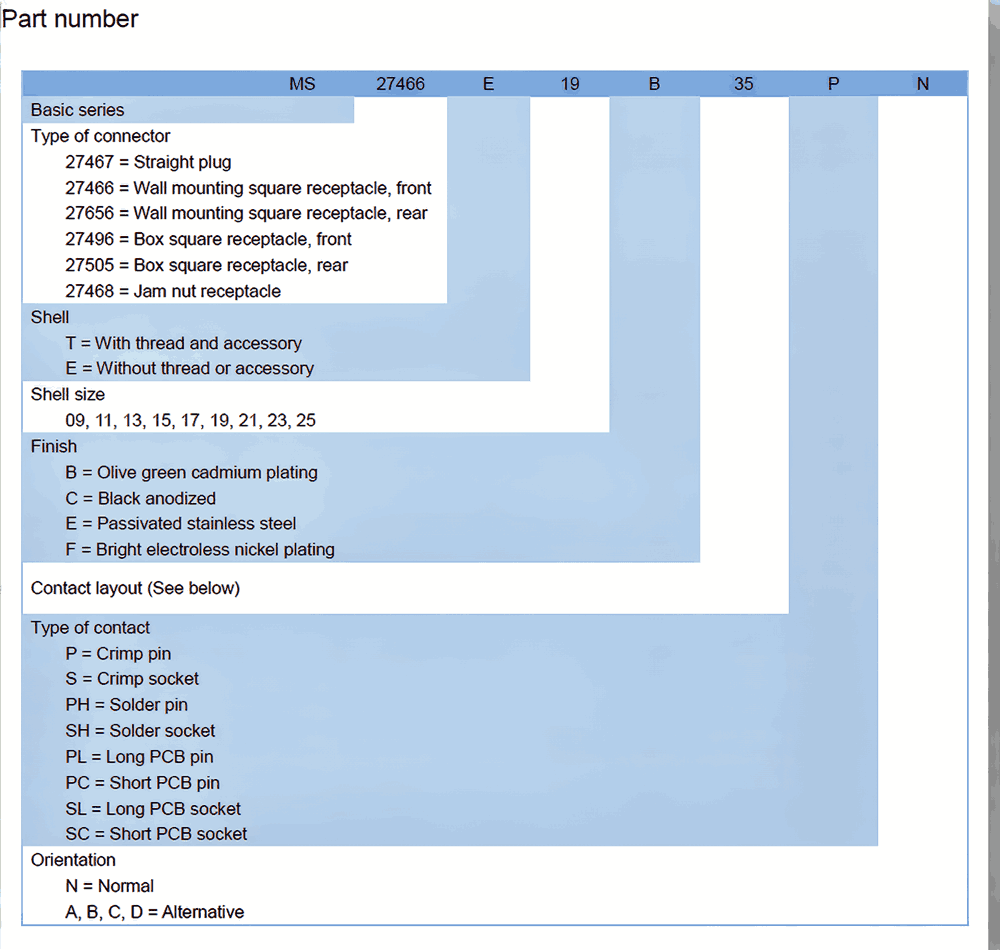
Part Number & Configuration
| Element | What it controls |
| Basic series | MS, the designation this series is ordered under |
| 27467 | Straight plug, the cable-end half of the pair |
| 27466 / 27656 | Wall-mounting square receptacle, front or rear mounting |
| 27496 / 27505 | Box square receptacle, front or rear mounting |
| 27468 | Jam-nut receptacle |
| T / E | T = with thread and accessory; E = without thread or accessory |
| Shell size | 11 here, the size this ms27467t11b01pn connector is built in; the series runs 09, 11, 13, 15, 17, 19, 21, 23 and 25 |
| Finish B | Olive green cadmium plating; C = black anodized, E = passivated stainless steel, F = bright electroless nickel |
| Contact layout 01 | The contact arrangement used in this shell |
| Contact type P | Crimp pin; S = crimp socket, PH / SH = solder pin or socket, PL / PC / SL / SC = long or short PCB pin or socket |
| Orientation N | Normal keying; A, B, C and D are the alternative positions |
Applications
- Avionics and UAVs — flight-control runs, radar and communication links inside the airframe, where the wiring vibrates from take-off to touchdown, panel depth is at a premium, and a vibration resistant circular connector is the baseline rather than an upgrade.
- Ground vehicles — armoured personnel carriers, missile launchers and command vehicles: cable ends that see shock, dust and long idle periods followed by hard use.
- Naval systems — shipboard power distribution, sonar and navigation equipment, where a salt spray resistant connector's plating and sealed interface decide how long the contacts stay clean.
- Field communications — portable radios, satellite links and encrypted data transfer, where a waterproof mil-dtl-38999 connector keeps the link alive through rain, mud and constant packing and unpacking.
- Replacement and repair — a cable end damaged in service is matched by the military circular connector supplier against the receptacle still on the equipment, so shell size, layout and keying have to line up with what is already there.
Environmental Resistance
| Exposure | What the connector is rated for |
| Cold | -65 °C, for cold-soaked airframes and altitude soak |
| Heat | +200 °C at the top end, the limit that makes this a high temperature military connector |
| Vibration | Continuous running on rotorcraft, tracked vehicles and engine-mounted equipment; a vibration resistant circular connector keeps the contact set seated and the interface free of fret |
| Shock | Hard landings, launch impulse and dropped transit cases put a short, high load through shell and coupling |
| Salt spray and fluids | Salt fog, de-icing fluid, fuel vapour and hydraulic mist; shell alloy and plating are the first barrier, which is why a salt spray resistant connector's finish callout is not cosmetic |
| Materials | Aluminium alloy or stainless steel shell with a corrosion-resistant finish, a dielectric insert and elastomeric seals |
Sealing & Ingress Protection
- Interface O-ring — an elastomeric O-ring closes the joint where the plug meets its receptacle, and it carries most of the rating.
- Rear seal — the backshell's own seal and cable clamp close the path along the wires, which makes the rear accessory part of the sealing system rather than an optional extra.
- Panel seal — behind a panel-mounted receptacle, a gasket closes the cut-out so moisture cannot slip into the enclosure through the mounting hole.
- Dust and immersion — the assembly is rated IP67/IP68 and is specified for dust-laden bays, wash-down and immersion, not for a dry rack.
- What undoes it — an unseated backshell, an over-tightened clamp that crushes the jacket, a nicked O-ring or a gritty interface will all let water past a plug that is otherwise sound.
- Keeping a waterproof mil-dtl-38999 connector waterproof — specify the rear accessories together with the plug, keep mating faces clean, and replace seals instead of re-using them.
Contacts & Signal Path
The 01 layout packs a multi-circuit contact set into the shell 11 body, which is the reason to choose this variant over a larger shell: a crowded panel takes fewer, fuller connectors instead of several small ones, and the cable assembly needs fewer breakouts between the equipment and the cable run. Contacts are turned and plated in gold or silver, giving a low, stable contact resistance that holds across builds and across repeated mating rather than drifting between production batches. Each contact is held in the dielectric insert so it cannot push back during mating and stays seated under load, which is what keeps that resistance figure stable in service. The P suffix means crimp pins: the wire is crimped into its contact with a calibrated tool, inspected, and then inserted from the rear of the plug. A crimped joint is repeatable, easy to inspect and far simpler to re-work than a soldered cup, which matters on a cable assembly that has to be signed off. Normal keying, shell size and contact layout together stop a plug being forced onto the wrong receptacle; where several connectors of the same shell size share a panel, positions A to D separate them so a technician cannot cross-mate two looms that look alike. This plug carries pins, so the receptacle it mates with must carry sockets.
Coupling & Field Handling
- Line up the keying — bring the plug to the receptacle with the keyway aligned; the shell and keying position will not let it start in any other orientation.
- Draw the coupling ring down — turn the knurled ring by hand until it seats. No tools are involved, which is what makes a cable change quick on a flight line or in a vehicle bay.
- Check the seat — a fully drawn-down ring sits flush and cannot be rocked by hand. The colour ring identifies the cable at a glance in a dense panel.
- Support the cable — T in the number means the shell carries a thread and takes an accessory, so fit a backshell or boot for strain relief and bend control before the cable bundle is tied down.
- Re-check after thermal cycling — repeated cycling is the harder test for a high temperature military connector: the shell expands and contracts against the insert, and the coupling has to keep its grip through every cycle.
- De-mate by hand — reverse the ring rather than levering on the shell; a vibration resistant circular connector should come apart as cleanly as it went together.
Ordering & Delivery
- Send the part number, the quantity and the configuration on your drawing — contact type, finish and keying position — and say whether the mating receptacle is being ordered at the same time. The full range is held in stock and not every item is listed, so a number that does not appear in the catalogue can still be available.
- Because orders come to the mil-dtl-38999 connector manufacturer directly, there is no distributor layer between the drawing and the build. Flexible MOQs apply across the range, and the commercial terms — price basis, Incoterms and payment method — are agreed in writing before production starts.
- Production or picking is then scheduled against your required-on-dock date, and the delivery date is confirmed once the configuration is locked.
- Packing follows normal export practice for connectors: contacts protected, assemblies bagged and boxed with the part number on the label so receiving inspection can match the delivery to the drawing. If your programme has its own packing specification, send it with the order.
- Shipment is arranged for stable global delivery with the documents your customs and receiving teams need. Build-to-drawing variants route through our custom 38999 connector factory and are quoted in the same way as catalogue parts.
Technical Support & Model Matching
Selecting the right connector is rarely a one-line decision. Send us your drawing, part number or a sample, and our engineering team will confirm the matching shell size, contact arrangement, coupling and mounting style, cross-reference discontinued or alternate part numbers, and advise on sealing and flange options for your environment. We also help troubleshoot fit, mating and signal problems, and give installation and commissioning guidance so your line stays up. As a direct manufacturer, our answers come from the people who build the parts — from first enquiry through after-sales support.
FAQ
What do the P and N suffixes on the MS27467T11B01PN connector mean?
P is the contact type — crimp pin, so each wire is crimped into its contact and the contact is inserted from the rear of the plug. N is the keying position: normal orientation. Both are configuration choices rather than features of the shell itself, so the same shell and layout can be supplied with socket contacts or a different keying position when a drawing calls for it.
Will salt fog and fuel exposure reach the contacts?
The shell and its plating take that exposure first, and the sealed interface behind them is the second line. In practice the contacts stay clean as long as the pair is kept coupled, the backshell matches the cable, and the finish on the drawing suits the environment — a salt spray resistant connector is specified for the deck and the coastal apron, not only for the hangar. If the assembly is opened regularly, inspect the interface for residue before re-mating.
Can the plug be built to a drawing that is not in the catalogue?
Yes. Shell size, contact type, finish and keying position are all selectable, and where a drawing calls for a combination that is not held as a catalogue item, our custom 38999 connector factory builds to that drawing. Send the number with the changes marked and the team will confirm whether the configuration can be produced and what the alternative would be.
Is the connector sealed before it is mated?
No. IP67/IP68 protection applies to a fully mated pair with the correct backshell fitted; unmated, the contacts are open to the air. That is normal for the series, and it is why harnesses are shipped and stored with protective caps on, and why a plug that has been left open on a bench should be inspected and cleaned before it goes back onto a receptacle.
How do I keep the coupling tight on a vibrating platform?
Seat the coupling ring fully by hand every time — a ring left part-way round is the usual reason a connector works loose. Support the cable close to the plug with a backshell clamp so the cable weight and movement are not carried by the coupling, and include a visual check of the ring in routine inspections rather than waiting for a channel to drop out.
What should I check before using it in a hot zone?
Match the accessory and the cable jacket to the same zone as the plug: a backshell rated lower than the connector will fail first. Route the cable clear of direct exhaust or bleed-air paths, and let the mounting hardware take the strain instead of hanging the cable from the shell. If the zone has a measured temperature, send it with your enquiry and we will confirm the configuration that suits it.