Product Overview
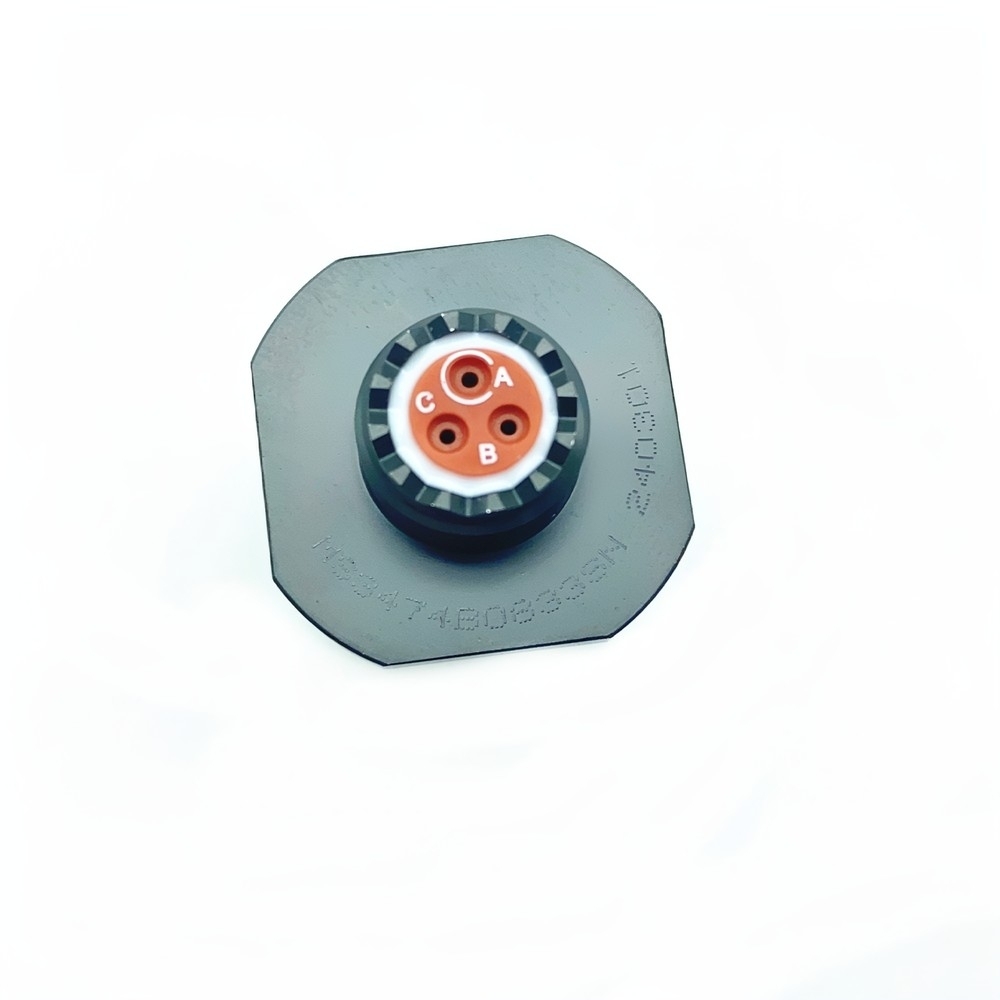
The MS3474B08-33SN circular connector is a jam nut receptacle from the MIL-DTL-26482 family: a panel-mount body, shell size 08, socket contacts and normal keying, finished in olive green cadmium plating. It is clamped through a single panel hole with a jam nut and stays fixed while the cable half is pushed on and given a short twist to lock.
Because it is built to a published specification, this MIL-DTL-26482 Series II connector is selected by shell size, contact layout and keying rather than by a proprietary outline. That matters on a cable assembly designed years ago: the panel half can be replaced without rebuilding the cable half.
Its natural home is the point where a cable assembly passes through an equipment panel — an avionics bay wall, a vehicle bulkhead, a shipboard cabinet or a test rack. The panel side carries sockets, so the contacts stay recessed and protected whenever the plug is off.
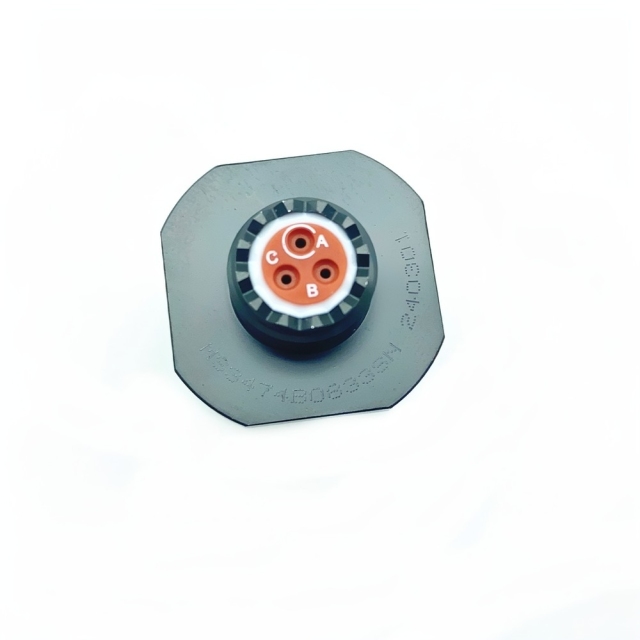
The insert face is colour-coded and its contact positions are marked, which lets a technician check the wiring against the drawing before anything is mated. The octagonal flange seats flat on the panel face and spreads the clamping load around the hole rather than concentrating it on the thread.
Plugs, receptacles, contacts and accessories all belong to the same range, so both halves of an interface and the parts around them can be sourced together from one MIL-DTL-26482 connector manufacturer.
Part Number Breakdown
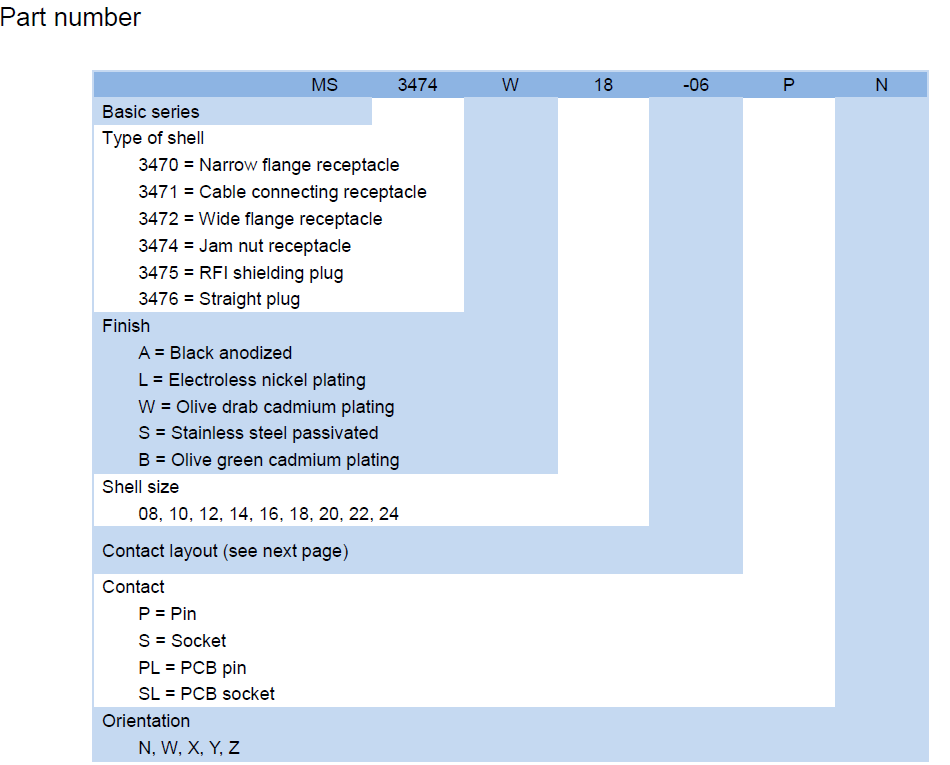
| Basic series | MS — MIL-DTL-26482 Series II |
| Shell type | 3474 — jam nut receptacle |
| Finish | B — olive green cadmium plating |
| Shell size | 08 |
| Contact layout | 33 |
| Contact type | S — socket |
| Keying | N — normal orientation |
| Mounting | Through-panel, jam nut against an octagonal flange |
| Coupling | Bayonet, short-turn lock and release |
MIL-DTL-26482 Series II Standard
MIL-DTL-26482 is the specification behind the bayonet military circular connector used across aerospace and defense equipment. It fixes the shell sizes, contact layouts, keying and coupling that make a two-part interface repeatable, and it sets out the conditions the connector is expected to survive: shock, vibration, moisture and temperature extremes. This receptacle, like every MS3474 connector OEM build, is designed and manufactured in strict compliance with MIL-DTL-26482 Series II. Working from the specification rather than from a lookalike outline is what makes a replacement part behave like the one it replaces. Compliance shows up in three practical places. Insert geometry is fixed, so contact positions do not drift between batches. Shell and coupling dimensions are fixed, so the mating half is chosen by shell size and layout instead of by supplier. And finish and contact plating are written into the code, so a cadmium-plated part is not quietly swapped for a nickel one. The same document covers the shell thread, the key and keyway arrangement and the seal interfaces, which is why the interface stays consistent from one production run to the next.
Coupling & Contact System
- Bayonet coupling: the plug goes on with a straight push and a short turn, and comes off the same way. There is no long thread to run down by hand, and the lock stays engaged when the panel is vibrating.
- Panel-side fixing: as a panel mount military connector, the body is clamped through the panel with a jam nut and seats on an octagonal flange, so the load spreads around the hole instead of sitting on the thread alone.
- Shell and shielding: aluminium alloy or nickel-cadmium plated steel shells provide EMI/RFI shielding and take the knocks that would otherwise reach the insert.
- Contact plating: gold over nickel keeps contact resistance low and holds up in humid or salt-laden air, where an unplated contact would corrode and drift.
- Sealing: O-rings and grommets close the interfaces between shell, insert and cable, keeping moisture, dust and fluids away from the contact zone.
- Backshell options: straight and elbow backshells are available to route the cable where the panel has space and to give the cable bundle proper strain relief.
- Coupling choice: bayonet is the Series II interface. Where a design instead calls for a threaded coupling circular connector, that is a different shell and coupling family, and the two are not interchangeable.
Shell Type Options
| Code | Option | Notes |
| 3470 | Narrow flange receptacle | Compact flange for panels with limited space around the cutout |
| 3471 | Cable connecting receptacle | Joins two cable runs in-line without a panel mount |
| 3472 | Wide flange receptacle | Wider base spreads clamping load on larger panel openings |
| 3475 | RFI shielding plug | Adds screening at the plug interface where interference is a concern |
| 3476 | Straight plug | Standard cable-end mating half for the receptacle |
| 08 to 24 | Shell sizes | Covers a range of contact counts and cable diameters across the family |
| A | Black anodized finish | Low-reflection coating that resists corrosion |
| L | Electroless nickel plating | Hard, wear-resistant surface for repeated mating |
| W | Olive drab cadmium plating | Traditional military finish with corrosion protection |
| S | Stainless steel passivated finish | For aggressive or wash-down environments |
Critical Applications
- Military ground vehicles: bulkhead and turret cable assemblies on tanks and armoured personnel carriers, where the run passes through armour and has to stay sealed at the penetration.
- Aircraft and avionics: flight control, engine control, navigation and communication suites on fixed-wing and rotary platforms.
- Naval and shipboard: radar, weapons control and shipboard communications, in air that attacks anything not plated for salt.
- Unmanned systems: data links and power on UAVs and UUVs, where the connector is often the only serviceable joint on the platform.
- Test and ground support equipment: GSE cable assemblies and test racks, mated and unmated far more often than the aircraft side ever is.
- Satellite and space systems: specified where weight, reliability and resistance to vacuum and radiation matter, subject to the space-grade qualification the programme requires.
- Programme sourcing: teams that buy through a military circular connector supplier need the same interface to repeat across builds and reorders, which is exactly what the standard is there to guarantee.
- Replacement and mixed fleets: repair teams often replace one damaged receptacle on a cable assembly built years ago. Where the mating half on that assembly is a threaded coupling circular connector rather than a bayonet type, send the old reference and a photo of the insert face and the match is confirmed before anything is ordered.
Installation & Mating
- Check the panel first: confirm the hole diameter and mounting thread against the receptacle drawing, and check that the flange has a flat seat with clearance for the jam nut.
- Fit the receptacle from the back of the panel so the flange sits on the face, then run the jam nut down by hand before tightening. Stop when the flange is fully seated, because over-tightening distorts thin panels and preloads the shell.
- Terminate the cable assembly contacts and check each one against the layout and keying on the drawing before the MS3474B08-33SN circular connector is mated for the first time.
- Verify every termination against the marked insert face while the plug is still off. A position swap found here costs minutes; found after assembly it costs a cable assembly.
- Mate with a straight push and a short twist. The bayonet military circular connector locks without tools and releases only when the coupling ring is turned back.
- Confirm full engagement at the coupling ring and the seal seat, then route the cable with a service loop so the first bend falls away from the backshell rather than on it.
- Record the fitted reference and keying in the equipment log, so the next replacement is a part number rather than an investigation.
Manufacturer Advantages
Compliance is the first advantage and the least glamorous one. This part is built to MIL-DTL-26482 Series II, and every connector undergoes environmental sealing and high-vibration testing before it leaves, so the receptacle fitted in month one behaves like the one fitted in month twenty. As a MIL-DTL-26482 connector manufacturer we are also the people who answer when a drawing question comes up, rather than a desk relaying messages to a factory. Durability is the second. The shell takes impact and abrasion, the plating takes salt and humidity, and the coupling takes vibration, which is why the same interface turns up on armour, aircraft and shipboard racks. Because we supply repair lines as well as production programmes, the failure modes that show up in service feed back into how the parts are built. That shows in lifecycle cost as well. A part that survives its service interval does not generate repeat replacement orders, unscheduled downtime or a fresh round of qualification work each time it is changed.
Ordering & Delivery
- Minimum order: flexible MOQs, so a single replacement receptacle and a production batch both go through the same process.
- Delivery: stable global delivery keeps scheduled lines supplied. Ask your sales contact to confirm the schedule for the quantity you need.
- Quote the full reference: for the MS3474B08-33SN circular connector, send the complete part reference rather than the shell size alone, so the finish, contact type and keying are not lost between enquiry and order.
- OEM orders: MS3474 connector OEM builds are quoted from your drawing, covering shell type, finish code, shell size, contact layout, contact type and keying.
- Mating halves and accessories: order the plug, contacts and backshell in the same enquiry, and list any threaded coupling circular connector used elsewhere on the wiring assembly so nothing is mixed at packing.
- Lead time and payment: confirmed with your sales contact when the quotation is issued, together with the Incoterm that suits your forwarder.
- Samples and documents: ask your sales contact about sample availability and about drawings for the shell size and finish you intend to use.
- Packing: tell us at order stage if your line needs a specific pack format, label or contact-layout marking.
Technical Support & Model Matching
Selecting the right connector is rarely a one-line decision. Send us your drawing, part number or a sample, and our engineering team will confirm the matching shell size, contact arrangement, coupling and mounting style, cross-reference discontinued or alternate part numbers, and advise on sealing and flange options for your environment. We also help troubleshoot fit, mating and signal problems, and give installation and commissioning guidance so your line stays up. As a direct MIL-DTL-26482 connector manufacturer, our answers come from the people who build the parts — from first enquiry through after-sales support.
FAQ
How is a jam nut receptacle different from a straight plug?
The receptacle is the fixed half. It is clamped through a panel with a jam nut and stays there while the cable is connected or removed, whereas a straight plug is the cable half and carries the coupling ring. In the MIL-DTL-26482 Series II connector range the two are separate references, ordered by the same shell size and contact layout.
Will it fit the panel cut-out I already have?
A panel mount military connector of this type is defined by its shell size and its mounting thread, so the existing hole and thread both have to match, not just the contact count. Send the panel drawing, or measure the thread and the hole, and the fit is confirmed before you commit. If the cut-out suits a narrow flange or wide flange shell instead, those are different shell types in the same family.
Should the panel side carry pins or sockets?
Sockets on the panel side keep the live contacts recessed whenever the plug is off, which is why receptacles are commonly built with socket contacts and plugs with pins. Both contact types are built here, so specify what your own wiring procedure requires rather than assuming either one.
Can you match an older or cross-referenced part number?
Send the number printed on the old part, a photo of the insert face and the panel it came out of. Cross-references for an MS3474 connector OEM programme are usually resolved from the shell type and contact layout first, then the finish and keying. Where an older wiring assembly carries a bayonet military circular connector that is no longer listed, we confirm the closest current configuration rather than guess at it.
What temperature and environmental limits apply to this part?
The Series II specification sets the environmental envelope the receptacle is built to, and the shell, seals and plating are chosen to survive shock, vibration, moisture and temperature extremes. The exact temperature limits and ingress protection depend on the shell, insert and sealing arrangement you order, so ask us to confirm the values for the finish and layout on your drawing.
Can the same receptacle be used on a new build and as a repair part?
Both, and that is most of its working life. A military circular connector supplier is usually asked for one piece to get an aircraft or vehicle back into service, and then for a batch to keep a line running. The MIL-DTL-26482 Series II connector interface does not change between those two cases, so the repair part and the production part are the same item.