Product Overview
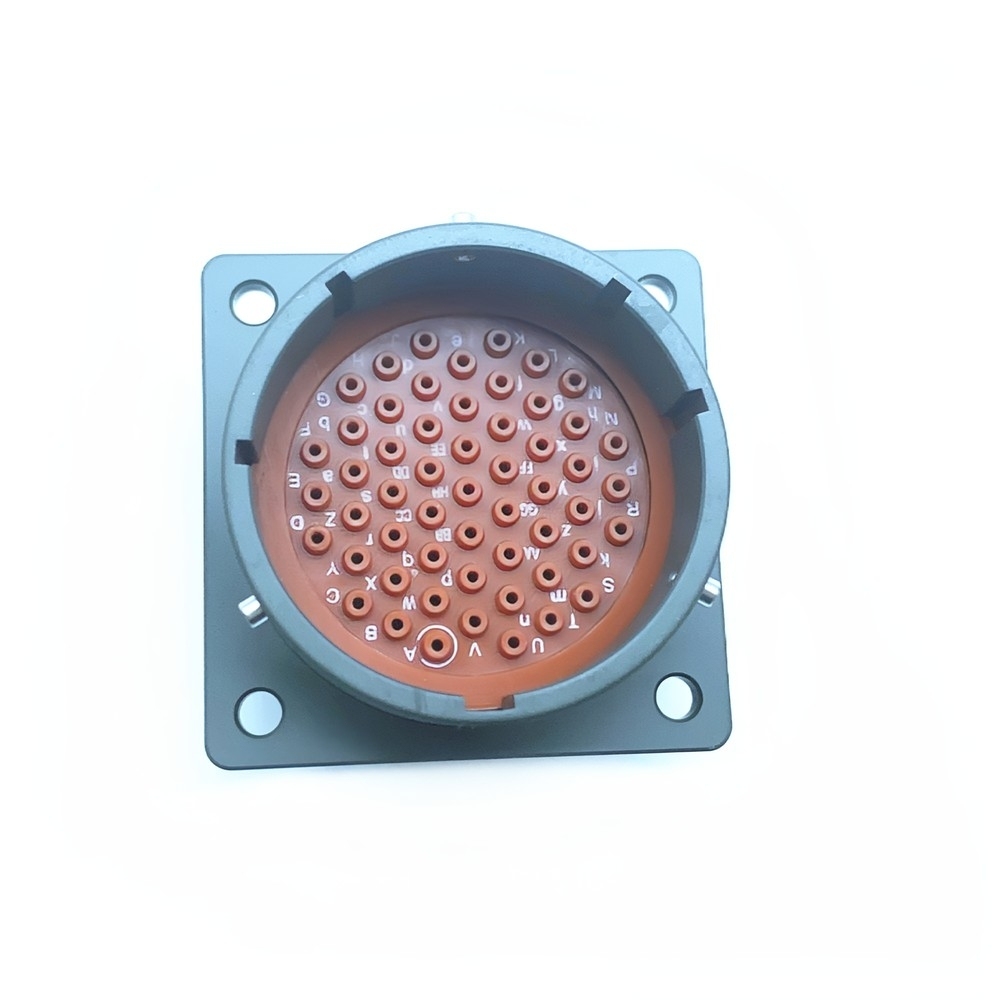
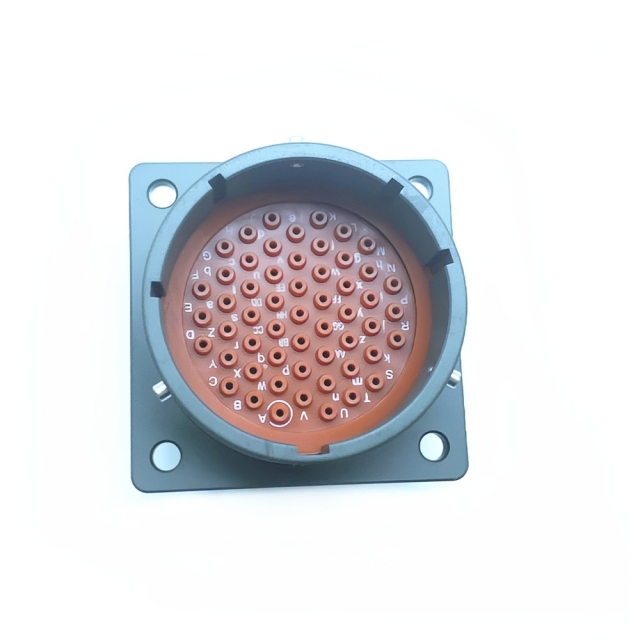
The MS3470W22-55PN connector is a narrow-flange receptacle from the MIL-DTL-26482 Series II family, built on a shell size 22 body with a 55-contact insert and pin contacts. The flange bolts flat against a panel or bulkhead, so this half stays fixed in the enclosure while the cable plug mates with it from the outside. What separates this build from a plain Series II shell is the shielding. In a cabinet where servo drives, switching supplies or radio equipment sit close to control wiring, that is the difference between a steady reading and a fault that only appears under load. The part is built as an aerospace circular connector and used as one: avionics bays, ground-vehicle harnesses, shipboard panels and test rigs are where a 22-55 insert usually ends up. Because the interface follows the standard, it mates with the plug halves, backshells and contacts already written into those harnesses, so a replacement or a new build can be ordered against the existing part number without redrawing the panel cutout.
Build and Materials
| Property | Value |
|---|
| Coupling | Bayonet, keyed shells with a detent that keeps a vibration resistant circular connector mated |
| Shell material | Aluminum alloy or nickel-cadmium plated steel |
| Contact plating | Gold over nickel |
| Contact design | Precision-machined for low contact resistance |
| Sealing | O-rings and grommets at the mated interface — the seal behind the waterproof military circular connector rating |
| Shielding | Conductive path through the mated shell and backshell |
| Backshell options | Straight or elbow, with cable strain relief |
MIL-DTL-26482 Series II Standard
MIL-DTL-26482 governs bayonet-coupled circular connectors for harsh environments: the shell envelope, the coupling, the keying, the insert arrangement and the way contacts are held in place. Those dimensions are fixed by the specification rather than by any one maker, which is why a receptacle built to it can be written into a drawing once and ordered again years later without the cable assembly changing shape. Series II is its own designation inside that specification. If a drawing calls for Series I hardware, treat this receptacle as a different part rather than an interchangeable one, and check against the print before substituting — matching by description alone is how the wrong shell ends up on a panel. Working from the standard also shapes the purchase. A buyer orders a part number, and every field in it — shell style, finish, shell size, layout, contact type, orientation — is fixed when the order is placed. That suits aerospace circular connector programs where the drawing is controlled and incoming inspection has to match a document, and it is what makes military circular connector wholesale practical. It also means the number carries more weight than the description: two receptacles can share a shell size and still not work together because the contact type or the orientation code differs.
Shielding and Signal Integrity
- What the shield actually does: on the MS3470W22-55PN connector, the mated shell forms a conductive enclosure around the insert. Radiated energy that reaches the outside of the connector is diverted to chassis ground at the flange instead of coupling onto the conductors inside — that enclosure is what separates an EMI shielded circular connector from a plain shell.
- Where interference comes from: variable-frequency drives, brushless motor controllers, switching power supplies, radio and radar transmitters, ignition systems and welding sets are the usual neighbors that turn an unshielded interface noisy.
- What a missing shield looks like on the bench: transducer readings that drift as a drive ramps up, serial links that drop frames under load, encoder counts that jump, and faults that vanish the moment the equipment is powered down.
- The cable side has to close the path: the receptacle carries continuity through the flange and shell, but the cable shield must be terminated in a metal backshell and bonded to the shell. A shield left floating at the plug end gives most of the benefit away.
- Bond the flange to the enclosure: paint, anodizing and soft gaskets insulate. Clean the panel surface where the flange lands, and use a conductive gasket or serrated washer where continuity through the chassis matters.
- When the shielded variant is worth specifying: dense inserts, long cable runs, cables sharing a conduit with motor leads, and equipment sitting close to a transmitter. For a short power-only run in a quiet cabinet, a standard shell usually does the job. A shielded connector that is not fully coupled does neither properly.
Environmental Resistance
- Vibration: the bayonet coupling detent holds the pair together and the insert retains each contact in its cavity, so a vibration resistant circular connector keeps its electrical path through engine-near airframe structure, rotorcraft, vehicle frames and pump skids. Mounting torque matters — a flange left loose turns vibration into wear.
- Mechanical shock: drops, hard landings and firing impulse are short, high-amplitude events. The shell and insert absorb them, provided the receptacle is bolted down properly and the cable is strain-relieved at the backshell.
- Salt spray: the cadmium plating on this build is the marine-facing option in the finish list, which is why deck, dock and coastal installations are usually ordered in it. Cadmium acts as a sacrificial coating over the aluminum beneath, so damaged plating should be touched up rather than left bare.
- High temperature: the MS3470W22-55PN connector is built for the temperature swings found in engine bays, avionics racks and equipment mounted next to power electronics. Confirm the rated envelope your program requires against the specification before you commit — the finish and insert materials are what set the limit.
- Waterproofing: the waterproof military circular connector rating rests on a mated pair.
- What to plan for in service: inspect coupling rings, O-rings and backshell glands at the interval your maintenance program sets. A seal nicked during installation will not recover on its own.
Reading the Part Number
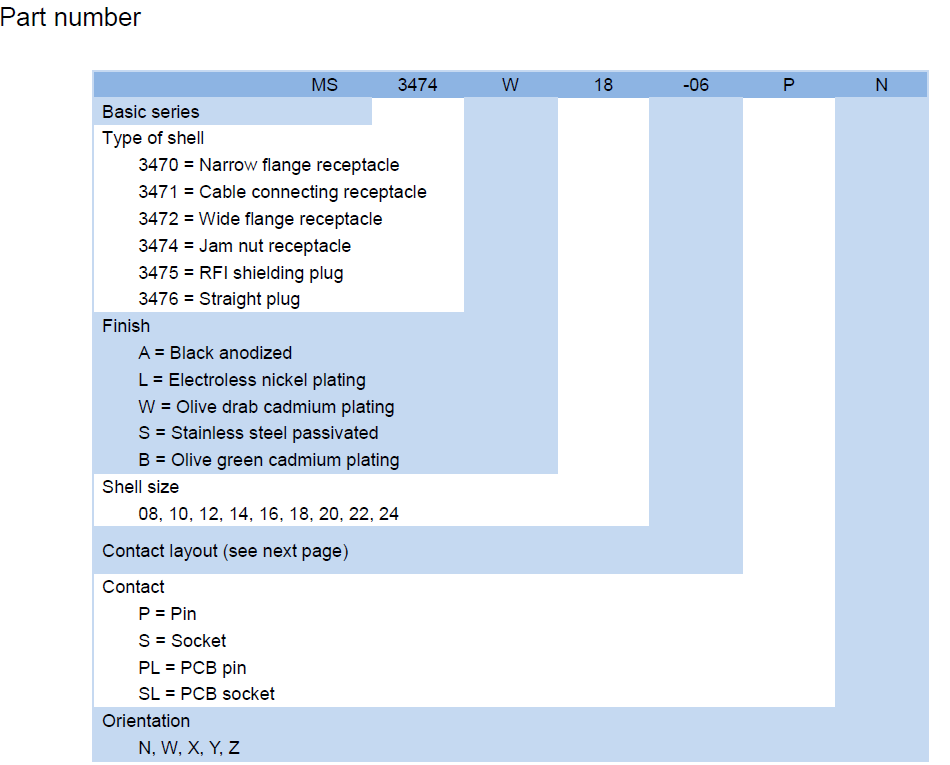
| Code | Meaning |
| Basic series | MS — MIL-DTL-26482 Series II |
| Shell style | 3470 — narrow flange receptacle |
| Other shell styles | 3471 cable connecting receptacle; 3472 wide flange receptacle; 3474 jam nut receptacle; 3475 RFI shielding plug; 3476 straight plug |
| Finish | W — olive drab cadmium plating |
| Other finishes | A black anodized; L electroless nickel; S stainless steel passivated; B olive green cadmium |
| Shell size | 22 |
| Contact layout | 55 |
| Contact type | P — pin |
| Other contact types | S socket; PL PCB pin; SL PCB socket |
| Orientation | N — normal |
| Other orientations | W, X, Y, Z |
Critical Applications
Aircraft and avionics are the first home for this interface: flight control runs, engine wiring assemblies, navigation boxes and the comms suite all use the family, with the receptacle bolted into an equipment tray and the wiring assembly plugged in during final assembly or an engine change. That is the classic aerospace circular connector duty, and it is where shielding earns its keep, because an avionics bay is full of transmitters. Naval and shipboard installations come next. Ground vehicles put the same hardware through a harder cycle, which is where a vibration resistant circular connector proves itself. Unmanned platforms, air and underwater, use these shells for data links and power where a failed connection costs a platform rather than a service call. Test and ground support equipment uses the same connectors as the platform it supports, so a known-good cable can move between the rig and the aircraft without an adapter. Space and satellite work is considered where weight, reliability and resistance to vacuum or radiation matter, subject to the specific space-grade qualification your program requires — that is confirmed separately from the standard product. Rugged industrial panels in oil and gas, mining and heavy machinery borrow the same hardware when ordinary industrial connectors do not survive the washdown, the vibration or the temperature swing.
Product Advantages
- Documented conformance: every field in the part number resolves to a controlled value, so an MS3470W22-55PN supplier and your receiving team have the same concrete reference to check the shipment against instead of a description.
- Shielding designed in, not added on: the shell carries the shield path as part of the mated pair, so the cable shop terminates the shield once, in the backshell, instead of building a separate braid assembly around the connector.
- Checked before it ships: as a MIL-DTL-26482 connector manufacturer, we put every unit through environmental sealing and high-vibration testing before it is packed, so the first mating happens on your bench rather than in the field.
- Lower lifecycle cost: a receptacle that survives its environment is not re-ordered, re-terminated and re-inspected every year. The saving turns up in maintenance hours, in the depot stock you do not have to hold as a buffer, and in the repeat-order simplicity a military circular connector wholesale program gets from a part number that stays the same.
Ordering and Delivery
- Send the part number, or the drawing it has to match. We confirm shell style, finish, shell size, contact layout, contact type and orientation before the order is released — a part number is only useful if both sides read it the same way.
- Confirm the mating half at the same time. A receptacle is one side of a pair, and the plug, backshell and contacts are usually ordered together so the cable assembly shop is not left waiting on a second delivery.
- Flexible MOQs. Tell your sales contact whether the requirement is a single replacement part or a quantity for a program. As a mil-dtl-26482 connector manufacturer we can confirm what ships from stock and what has to be scheduled.
- Stable global delivery. We ship internationally, including to customers in Europe, the Middle East and Russia. Confirm the current lead time against your build schedule when you place the order.
- Ask about samples and paperwork before a program commitment. Sample availability, traceability documents and inspection reports depend on the item — tell your sales contact what your quality team needs and we will confirm what can be supplied.
- Agree packing and marking up front. Bulk cartons, individually bagged parts and depot-ready labels are worth settling before the goods leave, especially when the shipment goes straight to a line or a stores bin.
- Confirm commercial terms at quotation. Payment method, shipping terms and pricing, including for military circular connector wholesale quantities, are set on the quotation — and as your MS3470W22-55PN supplier we keep the same terms visible on every repeat order.
Technical Support & Model Matching
Selecting the right connector is rarely a one-line decision. Send us your drawing, part number or a sample, and our engineering team will confirm the matching shell size, contact arrangement, coupling and mounting style, cross-reference discontinued or alternate part numbers, and advise on sealing and flange options for your environment. We also help troubleshoot fit, mating and signal problems, and give installation and commissioning guidance so your line stays up. As a MIL-DTL-26482 connector manufacturer, our answers come from the people who build the parts — from first enquiry through after-sales support.
FAQ
Is this a plug or a receptacle, and what does it mate with?
It is a receptacle — the fixed half that mounts through a panel. It mates with a plug of the same shell size and contact layout in the matching contact gender, so a 22-55 plug with socket contacts is the usual counterpart. If you are replacing one half of an existing pair, order against the number printed on the part rather than the description of the assembly; an MS3470W22-55PN supplier works from that number.
What is needed to complete the EMI shielding?
The shell and flange carry the shield path on any EMI shielded circular connector, but the cable side has to close it. Terminate the cable shield in a metal backshell, bond that backshell to the connector shell, and land the flange on bare conductive chassis metal. A shield that stops at the connector body and never reaches ground does very little for signal integrity.
Can it be used outdoors, on deck or in washdown areas?
Mated and correctly backshelled, yes — the O-rings and grommets seal the contact chamber, and the olive drab cadmium finish is the marine-facing option in the finish list. A waterproof military circular connector depends on the pair being closed, so keep the protective cap on an open receptacle. Confirm the specific fluids and exposure your installation involves before you commit.
How is the connector mounted to a panel?
The narrow flange bolts flat to a panel or bulkhead with the contact insert facing out, which keeps the footprint tight on a crowded tray. If the panel area is wider or the mounting has to pass through a thick wall, the same insert is available in a wide flange or jam nut shell style — the flange is the only thing that changes.
How do I avoid mis-mating it?
The shells are keyed and the coupling is bayonet, so the plug engages in one orientation only and locks with a short turn. The orientation code in the part number — N on this build — fixes where the keyways sit, so a replacement must carry the same code or the wiring will not route the way it did. Confirm the coupling ring is fully home before the equipment goes back into service.
What temperature and ingress limits should I plan around?
The connector is built for the wide swings of aerospace and military service, and the exact rated envelope depends on the insert and finish combination you order. Rather than work from a general figure, send the operating range and exposure conditions your program requires and we will confirm the version that covers them.